Showing posts with label Jerome. Show all posts

Monday, December 10, 2012

The Doctors and Frodo

If you read history you will find that the Christians who did most for the present world were just those who thought most of the next. - C.S. Lewis
In the past few posts, we have seen insufficient glimpses of the lives of four church giants, each of whom faced unique struggles and achieved notable success in the scope of their lives. Yet their brief lifespans were not the end. Each was selected as a Doctor as a result of the transcending value of their works, a characteristic easily traced as we look back from a vantage point of more than a thousand years. Jerome placed the Scriptures in the language of the common Christian, a gift that lasted many centuries. Ambrose added psalms and hymns to a lasting tradition of liturgy, some of which can still be heard in sanctuaries today. Augustine provided subsequent generations with the hope of rest and forgiveness in the arms of his Lord, a hope that later comforted one guilt-ridden Augustinian monk and prompted him to change the world. Gregory opened up the doors for the evangelization of Britain and provided bishops and pastors with a practical guide to church leadership, advice that remains relevant today.
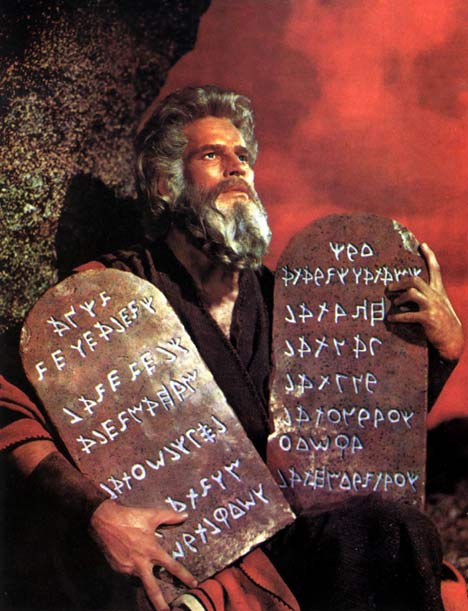
 
Yet none of these men sat with the gray, glory-splashed beard of Charlton Heston or the glowing haloes around their heads as later paintings are so apt to demonstrate. Although they have been bestowed the title of saint, we ought not be intimidated by their goodness. Ordinary humans granted extraordinary opportunity, they too struggled with the temptations and sins of the flesh as they endeavored to serve their great God.

One final thought: each of these individuals felt some reluctance to step into the position presented them. Although I did not say much of their historical context, each faced turmoil, disunity, and opposition in varying forms and degrees. Their tasks were great, certainly validating Gregory’s advice to “let fear temper the desire” of office. Yet each faced their given situation with reason, wisdom, and great faith. Their strength and greatness laid not in their personal achievement but in their ultimate trust in their Savior. In the challenges you face today, tomorrow, and in the coming years, remember the great history of fierce believers that precedes us and know that you do not stand alone. The God who used a grumpy hermit, a reluctant bishop, a prodigal son, and a theology mangler to bring glory to Himself and His Church can surely sustain you and enable you to serve Him in more ways than you may ever realize.
 
Soli Deo Gloria!
“I wish it need not have happened in my time,” said Frodo.“So do I,” said Gandalf, “and so do all who live to see such times. But that is not for them to decide. All we have to decide is what to do with the time given us.” - J.R.R. Tolkien

Wednesday, November 28, 2012

Born an Old Man

"Exsiccatum est faenum cecidit flos verbum autem Dei nostri stabit in aeternum." Is. 40:8 
"The grass is withered, and the flower is fallen: but the word of our Lord endureth for ever." Is. 40:8
Jerome was the grumpy old man at church. The one who knows what he’s talking about, but everyone rather wishes he didn't.  And Jerome is only the name you use to talk about him behind his back. His real name’s Sophronius Eusebius Hieronymus. That’s Mr. Hieronymus to you.

Born to a wealthy Italian family in AD 342 (or thereabouts), little Jerome is said to have been “born an old man,” assuming himself to be older and more established than his contemporaries. From an early age, Jerome’s great academic potential was recognized, and he soon acquired a taste for classical writers, a love that was to him a guilty pleasure throughout his life.

Following the completion of his education in Rome, Jerome committed to the monastic life, although it wasn't quite as solitary as he initially imagined. The year 374 found him in the desert of Chalcis, where he lived in a hermit’s cell and debated (or quarreled) over theological matters with his fellow hermits. During this time, in an effort to distract himself from the life he’d left behind, Jerome took up the serious study of Greek and Hebrew, knowledge that would aid him in the most significant tasks of his life.

It wasn't long before Jerome returned to Rome, where he served as the private secretary to Bishop Damasus, the man who would later encourage him to start work on his greatest contribution to the church. During his time there, Jerome was a little less than tactful in his interactions with other clerics and scholars, and he gained the disdain of many peers. A few years later, he would even go so far as to  write snobbishly to one of the few men who would surpass him: a young whippersnapper named Augustine. Even so, he did make the effort to establish a monastery and a convent with the help of his close friend Paula.

But what made the life of this chronically old man of lasting worth? His translation of the Scriptures into the common tongue: Latin.

By the fourth century, Latin had come to be the primary language of the Western church, and although there existed several translations of the Bible in the language, none were based on the original Hebrew texts. Jerome’s greatest efforts were, therefore, spent on the translation of the Old Testament, a task that he found frustrating in light of the coarseness of the Hebrew language. In a letter to Paula, he laments that “every elegance of speech, and beauty of Latin expression, the hissing sound of reading Hebrew has sullied.” Even so, he completed his task with impressive accuracy, in light of his solo endeavor. Unlike the Old Testament, his New Testament was not an entirely new translation, but rather a detailed revision of the then current Vetus Latina.

This translation was not immediately well received, however, and it wasn't until after his death that the Latin Vulgate (as it came to be known), would find favor as the standard translation for the Latin-speaking church.

But who cares? Latin’s now a dead language. Jerome himself is dead. Why does his memory and work continue to matter? Let me end by proposing a few possibilities:

1)   On the basest level, he reminds us that the grouchy old man down the pew may be worth a little more respect than we’d like to give him credit for. Jerome’s efforts to learn Greek and Hebrew for the primary purpose of translating the Bible is worthy of admiration and provides an example of the great lengths to which our Christian forerunners have gone in order to provide us with the dusty Bibles on our shelves. In light of this, what effort do we make to understand and treasure the gift that is God's Word? The work's been done for us, all we have left to do is take and read.

2)   Considering it’s one of the most significant translations of Scripture ever made, the Vulgate was initially frowned upon by its recipients, largely because of its newness. And this is no isolated incident. Wycliffe, Tyndale, and even the original King Jamesers faced similar opposition. Although it’s important to be cautious and discerning when it comes to theological and Scriptural matters, we must be careful in our quick rejection of the unfamiliar. After all, is not our ultimate goal the spread of the gospel to the glory of God? Or have we allowed our nitpicky nature and personality preferences to distract and divide us from unity in our God?
"Vivus est enim Dei sermo et efficax et penetrabilior omni gladio ancipiti." Heb. 4:12
"For the word of God is living and effectual and more piercing than any two edged sword." Heb. 4:12

Saturday, November 24, 2012

Doctors

Doctors. What’s your first thought? M.D.? Ph.D.? The Doctor?

How's about the Christian church?

Throughout the centuries, Christians have recognized certain individuals as heroes of the faith--men and women who have contributed to the advancement of Christianity in fair and foul weather. Among these, some have stood out as lasting contributors to the understanding of orthodoxy and the theological teachings of Christianity at large. In 1298, Pope Boniface VIII named four such individuals “Doctors of the Church,” people whose teachings and writings are useful to Christians in any era of Church history.

In the next few posts, I will endeavor to briefly explore the key aspects of the lives of the original four Doctors of the Western Church (Augustine, Ambrose, Gregory I, and Jerome) and take a look at the significance of their contributions. Although much could be written about each of these four men, space and format will not allow for great elaboration. Even so, I hope that you might learn a few new tidbits from the musings to come and find a new sort of admiration for these Christian brothers who strove to build and uphold the church long before we were ever thought of.

     "For all your saints, O Lord,
     Who strove in you to live,
     Who followed, obeyed, adored,
     Our grateful hymn receive.

     They all in life and death,
     With you, their Lord, in view,
     Learned from your Holy Spirit's breath
     To suffer and to do."
          Richard Mant

P.S. Please let me know if you note areas where I have misrepresented an individual or conveyed inaccurate information. As always, the goal is accuracy and improvement! Enjoy!