Showing posts with label Real Life. Show all posts

Sunday, March 30, 2014

Carpe Diem, I Suppose

Nearly three years ago I wrote of the fear that accompanies embarking on the grand collegiate adventure. Now I’m surrounded by graduation announcements, addresses, and books of stamps. The adventure hasn’t been so bad. In fact, most of my undergrad experience has been delightful.

But the fear hasn’t subsided. Actually, it seems to have morphed.

Aside from the wonderful friends and the professors who have so graciously mentored me—the memories made and knowledge attained—I also encountered that moment when life got real. For as long as I can remember, there’s been a plan. The details were hazy at times, but the structure was always there. Kindergarten. Elementary school. Middle school. High school. College. Graduation. And there it ends. For twenty-one years, I’ve assumed that I would make it to this point. What comes next, God only knows.

The life becoming real part comes with the shattering of that assumption.

Tomorrow is not guaranteed. Cliché, yes, but I had a hard time fully grasping it when I thought we were all invincible. My world couldn’t possibly be touched.

Then a good friend earns her degree while warding off a brain tumor. A professor teaches through cancer. A friend’s mother undergoes major heart surgery. Doctors diagnose my aunt with a rare cancer.  My dad suffers a mild but wholly unexpected heart attack. My mom finds herself looking for another position after thirty-plus years with the same hospital. A friend’s mom suffers a stroke.

My plan (what little there is left in it) may be broken at any moment, and that realization left me with a fear that that moment must be near at hand. Vague, “call me when you get a moment” texts accelerate my heartbeat, and my thoughts of the future are inclined to assume that I will always be in one area, clinging to what I’ve always known in the hopes that I can keep everyone and everything secure through sheer willpower. In my lawyerlike wrestlings with God, I adopt the stance that as soon as I let concern over all I hold dear go, He will take them all away; that I know this logic to be entirely illogical is of no consequence. I cling to everyone, and I will make all things well. My fear will hold life together.

Lies.

Joy Davidman won’t let me forget it. She challenges me: “Our life is based on fear; if we should ever grow brave, what on earth would become of us?” Grrar. She’s right. But if I let go, then I’ve let go. I don’t control it anymore. Sorry for the cynicism, Elsa, but it’s not easy.

But that’s out of my hands. Yes, everything I know that’s safe and ordered might be obliterated in ten minutes’ time—it was for families in Oso and China and Crimea. It’s the most terrifying thought my mind entertains at the moment, and I can’t do anything about. I can’t make all things well. Yet Julian of Norwich wrote that “all shall be well, and all shall be well, and all manner of things shall be well.”

So…what will happen if I make my goal bravery? What if I attempt to put aside what Davidman calls “the sin of fear”? What if I accept that whatever happens now, someday all things will indeed be “well”—whatever that means? What if I let go?

I haven’t the foggiest. I guess I’ll find out soon enough. 

For the moment, I’m merely working to accept that my God is neither a tame God nor a safe God. He is simply and complexly a good God. “Christ never offered us security,” Davidman tells me. I hate it, but I revel it in it—one of the great paradoxes His nature elicits. Sigh. And all shall be well…

And all shall be well and
All manner of things shall be well
By the purification of the motive
In the ground of our beseeching.
     T.S. Eliot, Four Quartets: Little Gidding, III

Thursday, February 21, 2013

Church Thoughts


Just a thought: I highly encourage you to find a church and stick with it through thick and thin. Like any community or institution or whatever you deem fit to call it, a church goes through the best of times and the worst of times. For everything there is a season, if you will. I know many choose to throw their hands up and walk away when the going gets tough, and why not? It’s a buyer’s market as far as churchgoing is concerned--why not exchange for a better one?

Now, I don’t mean to belittle those forced to leave a church for matters of conscience or orthodoxy. Such situations occur, and after all else fails, there may be no other recourse. But don’t church hop. Don’t choose a church based on the color of the carpet. Don’t come and go with the pastor or with your best friend. Don’t leave because you’re bored and feel the need for a change of stained glass. These things are trivial. They miss the point.

A church community endures for more than mere entertainment, more than social hours, coffee carts, and pep talks. It’s for the pursuit of life and godliness, the spurring on towards love and good deeds, the unified adoration of our Father and Bridegroom. Such things do not come in isolated units Sunday to Sunday. Growth comes not in abandoning ship when you see a puddle of water on the floor. A body that frequently dismembers itself and trades limbs cannot be healthy.

No, growth and unity is allowing kids to pass from VBS attendees to group leaders. It’s watching the youth evolve from the uncertainty of life beyond graduation to the young families running through the narthex. It’s puzzling at how the little old ladies remain little old ladies all your life.

It’s become cliché to say it, but life in a church involves knowing the people and knowing their stories, and it requires dedication and sacrifice beyond two year stints at a dozen congregations. Our society likes impersonal fast food, fast internet, fast cures, but let’s not give in to fast church.

I’ve been blessed to know one church throughout my life. I faced my irrational fear of abandonment to Sunday school, met my first best friend, sat through hours-long congregational meetings while precious snow melted outside, celebrated the church’s centennial, mourned the passing of pastors, and welcomed new chapters of its history. The grit, grace, and not-glamor has been laid before me as a lesson in the Christian life, demonstrating what it means to live together as fellow sinners saved by an incomprehensibly good God.

What does this look like? Lingering conversations after the service. Knowing where to find forks in the kitchen. Cleaning the flooded basement. Clearing the brush in the back lot. Restoring order to the windows left broken by vandals. Such intimacy with a church body does not come by running at the first sign of trouble or at the first spark of disagreement. It is not gained by jumping from ‘in’ church to ‘in’ church. Rather, it requires the long neglected virtues of faithfulness, dedication, commitment, perseverance, and hope. Sometimes it’s hard. Sometimes it hurts. But in the end, the joys and fruits of long-term intimacy with a Christ-centered community are oh so worth it and ever so beautiful.


Monday, December 10, 2012

The Doctors and Frodo

If you read history you will find that the Christians who did most for the present world were just those who thought most of the next. - C.S. Lewis
In the past few posts, we have seen insufficient glimpses of the lives of four church giants, each of whom faced unique struggles and achieved notable success in the scope of their lives. Yet their brief lifespans were not the end. Each was selected as a Doctor as a result of the transcending value of their works, a characteristic easily traced as we look back from a vantage point of more than a thousand years. Jerome placed the Scriptures in the language of the common Christian, a gift that lasted many centuries. Ambrose added psalms and hymns to a lasting tradition of liturgy, some of which can still be heard in sanctuaries today. Augustine provided subsequent generations with the hope of rest and forgiveness in the arms of his Lord, a hope that later comforted one guilt-ridden Augustinian monk and prompted him to change the world. Gregory opened up the doors for the evangelization of Britain and provided bishops and pastors with a practical guide to church leadership, advice that remains relevant today.
 
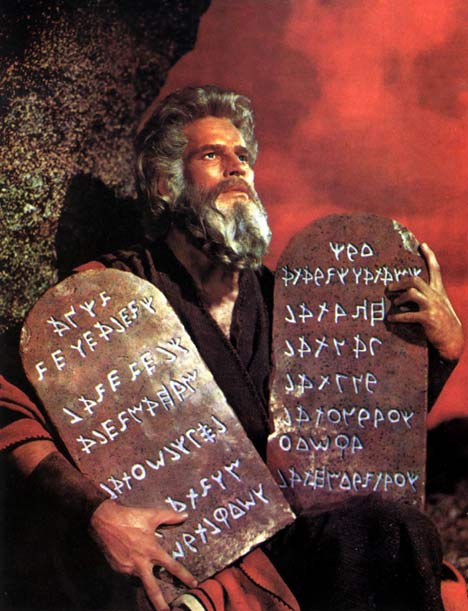
Yet none of these men sat with the gray, glory-splashed beard of Charlton Heston or the glowing haloes around their heads as later paintings are so apt to demonstrate. Although they have been bestowed the title of saint, we ought not be intimidated by their goodness. Ordinary humans granted extraordinary opportunity, they too struggled with the temptations and sins of the flesh as they endeavored to serve their great God.

One final thought: each of these individuals felt some reluctance to step into the position presented them. Although I did not say much of their historical context, each faced turmoil, disunity, and opposition in varying forms and degrees. Their tasks were great, certainly validating Gregory’s advice to “let fear temper the desire” of office. Yet each faced their given situation with reason, wisdom, and great faith. Their strength and greatness laid not in their personal achievement but in their ultimate trust in their Savior. In the challenges you face today, tomorrow, and in the coming years, remember the great history of fierce believers that precedes us and know that you do not stand alone. The God who used a grumpy hermit, a reluctant bishop, a prodigal son, and a theology mangler to bring glory to Himself and His Church can surely sustain you and enable you to serve Him in more ways than you may ever realize.
 
Soli Deo Gloria!
“I wish it need not have happened in my time,” said Frodo.“So do I,” said Gandalf, “and so do all who live to see such times. But that is not for them to decide. All we have to decide is what to do with the time given us.” - J.R.R. Tolkien

Wednesday, November 14, 2012

Screwtape Discusses Poetry

My dear Wormwood, 

Your usual ramblings in defense of your actions are growing tiresome, and I will not shield your every mistake from the review of your superiors. Your concerns about his churchgoing and “love” life remain unchanged, and if you’d only return to the instructions I have already deigned to lay before you, you’d find an answer. My concern lies in a passing comment that you seem to believe is insignificant--the patient’s revival of interest in poetry.

Are you blind to the effects of this turn? The serious study of poetry may be the nearest he ever comes to that which the Enemy calls Truth (aside from the words of His own blasphemous book), for poetry is not a mere outpouring of ideas cleverly phrased, as prose so often is (with the help of our more competent tempters), but rather the nearest point to which a writer’s pen touches the soul in a glimpse of divine Truth. For poetry is one of the Enemy’s favorite tools in the adorning of Truth. It teaches while it entertains. It leaves short, lasting impressions that, if left to unfold naturally, could result in irreparable damage. Furthermore, verse is the most perfect showcasing of the logic, wit, and intellect with which He has endowed His creatures, so that even the most base and seemingly wretched of poets cannot help but leave a trace of the Enemy.

No, what you must do is make the patient study a poem not as an intimate piece of writing, but as an abstract form of past art irrelevant to his present time. Let him dig for undiscovered coals in the diamond mine--obscure interpretations that leave him to speculate on fruitless thoughts. Let him compare the piece to his own cultural standards and critique it for its lack of sensitivity and modern propriety. Never let his mind slip to the notion that this couplet could possibly mean anything to him.

Moreover, if he must continue in his love of verse, make him content with the modern poets--Pound, MacLeish, and the like. The best philosophy is that poems “should not mean but be,” for then poetry becomes little more than a lofty appreciation for the tone and word choice of his fellow artist. Keep him locked in his own era that he might not open his eyes to the lineage of humbled souls dating back to the shepherd days of that wretched David. Even so, be wary lest he stumble upon those who have been called the War Poets, for though they seem dark and despairing, they too begin to trifle with the soul and cast the mind to pondering matters of life and death and the human condition. Such things, although valuable to the untrained tempter, quickly lend themselves to themes too close to the Enemy’s eternity and plan. There is one particular poet who seems to be toeing the line between sound atheism and disastrous discovery, speaking of “the clouds of God’s hate” and declaring that “Thou art not Lord while there are Men on earth.” His tempter had best handle him with great care if he wishes to avoid his patient’s awakening to the significance of his own words. Remember, the Enemy takes great pleasure in perverting our efforts in one man to transform the soul of another, if not also his own.

Still, the best method of all is to create an unexplainable disgust for the “intellectual snobbery” and highfalutin nonsense that characterizes all poetry. Allow him to judge all poetry by that one “hard poem” he read back in school and cast the whole lot aside for something more relevant, such as the sports game on the radio or the barking dog next door. Remember, one good sonnet could crumble all of the walls you now strive to build.

                                                                                    Your affectionate uncle
                                                                                    Screwtape

Wednesday, October 31, 2012

Snow White's Blush

Why have we allowed ourselves to lose our shame? What’s more, why are we proud to have no shame? What glory is there in it but the knowledge that we have been offered robes of white and yet choose to lounge in the revolting filth of our own creation?

Yes, I understand that “every saint has a past and every sinner has a future,” but when is it wise to revel in a past that withholds us from the promise of glory? Be it sexual sin or internal self-righteousness, Christians ought never to return to the slough from which they were rescued. Ought being the operative word. We struggle, we fall, we fail, but we ought not boast in falls or callous our hearts against the shame, lest we silence the voice of that “asphyxiating cloud” that so warmly whispers that we guard our hearts.

For to boast in sin is to tear down the brethren--for how hard is it to remain steadfast alone? To boast in sin is to reject the lost--for who seeks answers from one as lost as them? To boast in sin is to mock our salvation--for it is proof that precious pearls have been cast before swine. And I am a pig.

How often have I laid my palms at my King’s triumphal entry only to shout “crucify Him!” when the roar of the crowd swept me along?

Why do I not weep when my Savior is mocked---when I realize that I was the voice that mocked Him? I sin not even that grace might more abound, but simply because I seek to belong, because I want a story to tell, a moment to remember.

May I never let Snow White’s shocking blush fade from my face. Would that I be made unabashedly ashamed of my own unworthiness that I might seek to know the fullness of my Lord’s holiness and mercy. May the red of my shame burn brightly against the white of His cleansing purity, and may I always be granted the humility to fall at His divine feet in earnest repentance.

“My soul, bow down under a sense of your natural sinfulness, and worship your God. Admire the grace which saves you--the mercy which spares you--the love which pardons you!” - Charles Spurgeon